
From handwritten ledgers to artificial intelligence: understanding the tools, the terminology and the question of transparency.
There was a time when keeping the books meant opening a ledger, picking up a pen and making sure the figures added up. Later came calculators, spreadsheets, databases and customer relationship management systems, each promising to make our working lives easier, faster or more efficient. Those of us who lived through these changes learned to adapt, often without giving much thought to the fact that we were participating in successive technological revolutions.
Photographers experienced a similar journey. Film gave way to digital photography, darkrooms gave way to editing software, and the ability to manipulate an image became available to anyone with a computer and the patience to learn a few new skills. Today, artificial intelligence has added another layer of possibilities, from correcting a photograph’s imperfections to generating an image of an event that never took place.
Now, almost everywhere we turn, we hear the same expression: “It’s AI.” A picture is AI. A written article is AI. A customer service response is AI. A workplace application has AI built into it, so apparently everything we do with that application is AI, too. Somewhere along the way, we seem to have decided that one broad label is enough to explain a remarkably diverse range of technologies and activities. It isn’t. There is a considerable difference between asking artificial intelligence to create something from scratch, using it to assist us with work we direct ourselves, and simply using software that happens to include AI-powered features. There is an equally important difference between improving a photograph and manufacturing visual evidence of something that never happened.
These distinctions affect how we interpret social media, how employers evaluate our skills and how much trust we place in the information presented to us. Perhaps it is time to move beyond asking whether something is AI and start asking a more useful question: What, exactly, did the AI do?
We’ve been here before
Think back to the introduction of spreadsheets. Someone who had maintained accounts by hand suddenly had a tool capable of performing calculations, updating totals and reducing the time spent on repetitive tasks. The spreadsheet did not magically turn an inexperienced person into an accountant, nor did it make an experienced accountant’s knowledge obsolete. The tool changed the process, but someone still needed to understand the figures, recognise errors and interpret what the numbers meant.
Customer databases and CRM systems brought another change. Information that had once been scattered across filing cabinets and individual memories could be organised, searched and shared. Automation eventually took over routine tasks, from sending reminders to assigning customer enquiries. Now AI can analyse information, identify patterns, draft responses, summarise conversations and suggest what might happen next.
AI is not simply another spreadsheet, of course. Generative AI can produce convincing text, images, audio and video, sometimes making the origin of its output difficult to recognise. It introduces new questions about accuracy, authenticity, responsibility and disclosure. Nevertheless, our experience of previous technological transitions gives us a useful starting point: we do not have to approach AI as though every skill we acquired before its arrival has suddenly become worthless. We do need to understand what the new tools can do, where they fall short and where human judgement remains essential.
Three expressions we need to distinguish
Let’s start with three terms that are frequently used as though they mean the same thing: AI-created, AI-assisted and AI features integrated into conventional software. These are useful working definitions rather than universally standardised legal categories, and the boundaries can overlap.
AI-created: the machine generates the principal content
Imagine asking an AI image generator to create a photorealistic picture of a village in the Swiss Alps at sunset. You provide the prompt, refine it and select the image you like best. The AI has generated the principal visual, even though you have directed the process and made creative decisions.
The same applies to asking an AI system to write a complete article, compose music or generate a video from a description. Human involvement can still be considerable, but the principal content has been generated by AI.
AI-assisted: the person directs the work
Now imagine writing an article based on your own research, experience and ideas. You use AI to explore alternative headlines, challenge the structure or identify unclear passages. You evaluate the suggestions, revise the text and decide what makes it into the final version. That is AI-assisted writing.
The same applies to photography. You take a photograph and use Lightroom or Photoshop to reduce noise, sharpen details, isolate a subject or remove an unwanted object with an AI-powered feature. You remain responsible for the creative direction and the final image.
AI assistance can range from a minor intervention to a substantial contribution. It does not, however, automatically guarantee meaningful human oversight. Someone can use an AI assistant and accept everything it produces without checking a single fact. The label alone tells us little about the quality of the process.
AI tools built into software: not everything is AI
You conduct a video meeting using Zoom, calculate figures in Excel, manage customer information in a CRM or edit photographs in Photoshop. These applications may offer AI-powered features, but that does not mean every task performed in them is AI-created or even AI-assisted.
A regular video call is not an AI-generated conversation. A conventional spreadsheet formula does not become AI simply because the application has an AI assistant. And adjusting brightness with a standard slider does not automatically make a photograph AI-generated.
The same application can support very different workflows. You might use Zoom simply to speak to a client, enable an AI feature to summarise the meeting or use its transcript as the basis for a report generated by another AI tool. The application is the same; the nature of the work is different.
The workplace: who is doing the work?
Consider an accounting department. Software has long automated calculations and repetitive administrative tasks. An AI-enabled system might go further by identifying unusual transactions, suggesting explanations for discrepancies or producing a draft report. Identifying an anomaly does not establish that fraud has occurred, and generating a report does not guarantee that its figures are correct. Someone still needs to verify the information and decide what action is appropriate.
Customer service offers another example. An agent might use AI to summarise a customer’s previous interactions or suggest a response. The agent checks the circumstances, applies company policy and decides what to send. Alternatively, an automated agent might generate and send replies with little human intervention. These are different levels of automation, with different implications for oversight, errors and accountability.
Recruitment, administration, research, translation and content production all present similar distinctions. For employees, knowing how to prompt an AI system is only part of the picture. Understanding the subject, recognising an implausible result, protecting confidential information and checking the output are equally important. For employers, the question should not simply be whether an applicant has experience with AI, but how they use it and how they ensure the quality of their work.
AI can support professional judgement, but we should not assume that it replaces it. And once we understand how AI contributes to our work, another question inevitably follows: when are we expected to disclose that contribution?
The disclosure dilemma: when do we have to say it’s AI?
People are understandably conflicted about this. A photographer may worry that using one AI-powered feature means their entire image must be labelled as AI-generated. A writer may use AI to improve a draft and wonder whether the finished article needs a disclaimer. A business may use AI features in its customer service software without knowing what it needs to tell customers.
There is no single answer for every situation. Legal obligations, platform policies, professional standards, contractual requirements and voluntary transparency are related, but they are not interchangeable.
The European Union: what changed on 2 August 2026?
The European Union’s AI Act includes transparency obligations under Article 50, which began applying on 2 August 2026. These provisions are intended to help people recognise certain AI-generated content and interactions. However, the rules do not require everyone to label everything that has been touched by AI.
The obligations depend on the type of content, the role of the person or organisation and the circumstances of its use. Providers of generative AI systems have obligations concerning the machine-readable marking and detectability of generated outputs, subject to applicable exceptions. The European Commission’s guidance clarifies that the marking obligation does not apply when an AI system performs an assistive function for standard editing.
For people or organisations using AI, Article 50 includes disclosure requirements for deepfakes and certain AI-generated or manipulated text published to inform the public about matters of public interest. There are qualifications and exceptions. For example, the text disclosure requirement does not apply where the content has undergone meaningful human review or editorial control and a person or organisation assumes editorial responsibility for the publication. A superficial spelling or grammar check alone does not amount to that level of review.
The rules are therefore more nuanced than a blanket instruction to disclose every use of AI. Other legislation, including copyright, data protection and consumer protection rules, as well as employment policies and client contracts, may raise separate questions.
Freelancers, photographers, writers and other creators who publish or produce content commercially should be particularly mindful of the context in which they work. For more detail, consult the European Commission’s guidance on transparency obligations under Article 50 of the AI Act.
Instagram and Facebook: what about platform labels?
Legal requirements are only part of the picture. Meta, the company behind Instagram and Facebook, has developed its own approach to identifying AI-generated and manipulated content, using technical indicators and user disclosures. How AI information is displayed can depend on the extent of the AI involvement detected.
This matters to photographers and other creators. Meta has acknowledged that technical indicators can lead to labels appearing on authentic photographs that have undergone relatively minor AI-powered modifications. Its labelling approach has evolved to better distinguish content generated by AI from content edited or modified using AI tools.
A photograph enhanced with AI denoising is not the same as an entirely synthetic portrait. Yet both may contain technical indicators associated with AI tools, and a platform’s detection system may not always capture the full context.
Creators should distinguish between a platform applying a label automatically, a platform requiring a user disclosure and a legal obligation to disclose particular content. One does not automatically establish the others. Because policies and implementation can change, anyone relying on a specific requirement should check the current guidance before publishing. Meta’s explanation is available in its article on labelling AI-generated content and manipulated media.
The uncomfortable grey area
Imagine a photographer who spends an afternoon taking pictures, then uses Photoshop to extend a background with a generative feature. Is the result an AI-assisted photograph, an AI-modified photograph or AI-generated content? The answer may depend on the extent of the alteration, the context in which the image is published and the rules being applied.
Consider a writer who researches a subject, develops an argument and writes an article, then uses AI to challenge the structure, improve clarity and suggest alternative wording. The writer makes the final decisions and takes responsibility for the publication. Is the article AI-created or human-authored work produced with AI assistance?
Now imagine a social media creator using an AI-powered application to sharpen a photograph without giving the feature a second thought. Technical metadata associated with AI editing might lead the platform to identify that involvement, even though the creator regards the photograph as their own work.
These are legitimate questions, and the answers are not always intuitive. The solution is neither to conceal AI use nor to treat every minor technical intervention as though the entire work had been generated by a machine. Instead, we need to separate four questions: 1. what did the AI contribute, 2. what does the applicable law require, 3. what do the platform or client rules require, and 4. would voluntary disclosure help the audience understand the content?
The first establishes what happened; the next two help determine the obligations; the last invites us to consider transparency as a matter of trust, rather than merely a box to tick.
Photography: from film to deepfakes
Photography offers one of the clearest ways to understand why these distinctions matter. Film photography required particular skills and equipment, and images could be manipulated in the darkroom. Digital photography changed the process: images could be viewed immediately, adjusted on a computer and shared around the world within seconds. Editing became easier, and the boundary between capturing an image and altering it became increasingly flexible.
Photoshop and similar applications allowed photographers to retouch portraits, remove distracting elements, combine images and create scenes that never existed as photographed. AI has expanded those possibilities. A photographer can use AI to reduce noise, select a subject or remove an unwanted object. Another person might generate an entirely new, photograph-like scene. Someone else might use a genuine photograph as the starting point, replace the background and generate additional elements, combining original photography with AI-generated content.
Then there are deepfakes: synthetic or manipulated images, audio or video that can make a real person appear to say or do something they never said or did. Such content can be used for entertainment, parody or fiction, but it can also be used to impersonate people, manufacture evidence or mislead an audience.
These examples are not interchangeable. A photograph enhanced with AI noise reduction is not equivalent to a fabricated image of a public figure committing a crime. Nor is digital art necessarily AI art. Digital art can be created entirely by a human using illustration software or a drawing tablet; AI-generated art is one category within a much broader field of digital creativity.
The relevant question is not simply whether technology was involved, but what was created, what was changed and how the result is presented.
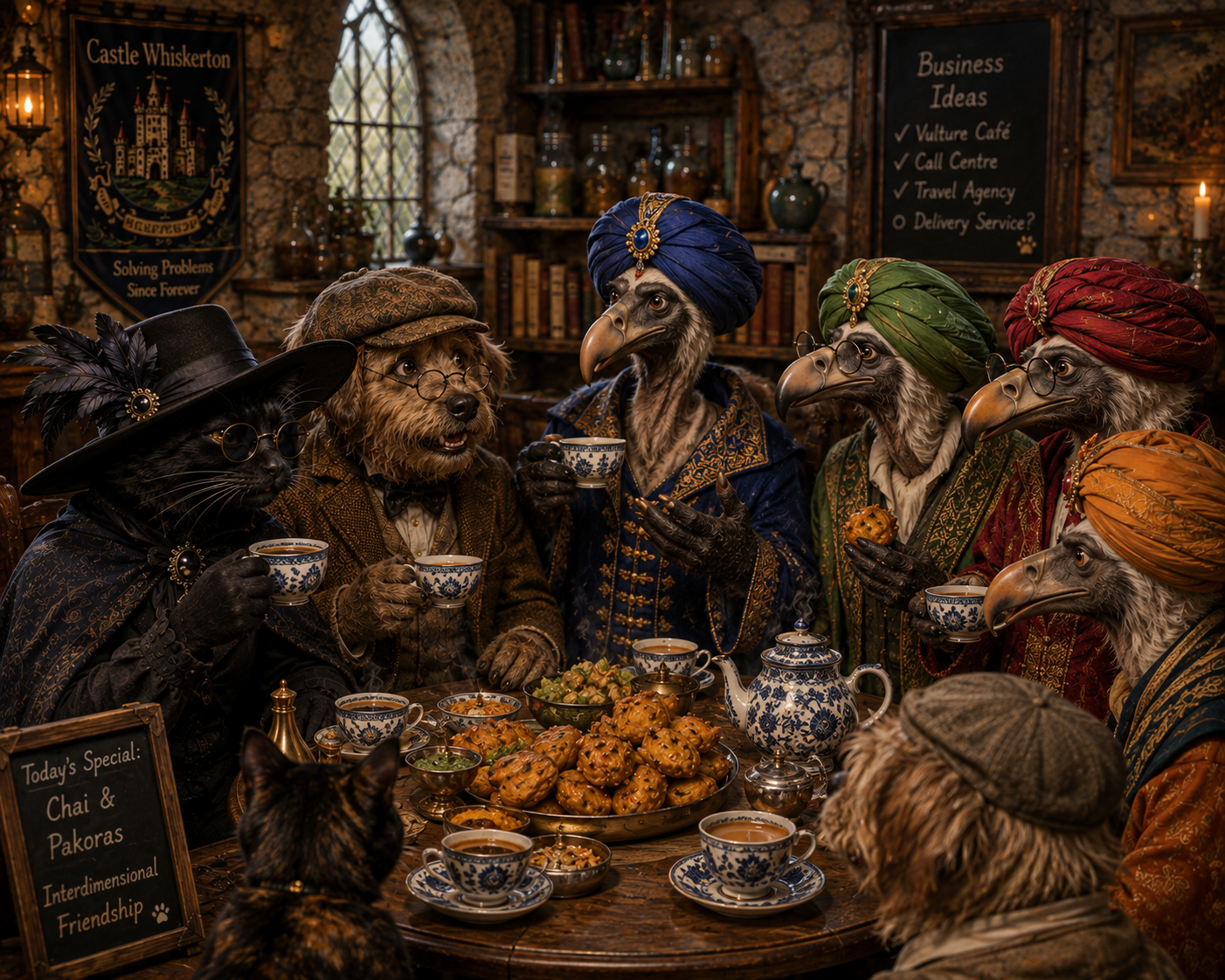
It can, however, get really complicated when it comes to the digital art. Consider the following examples:
These two images may seem familiar to you if you are following the multiverse stories on the Marie Balustrade blog. They are characters that are entirely AI-generated creative content. The issue here, once I eventually proceed to do the book, would be the copyright, but that is a topic for another day.

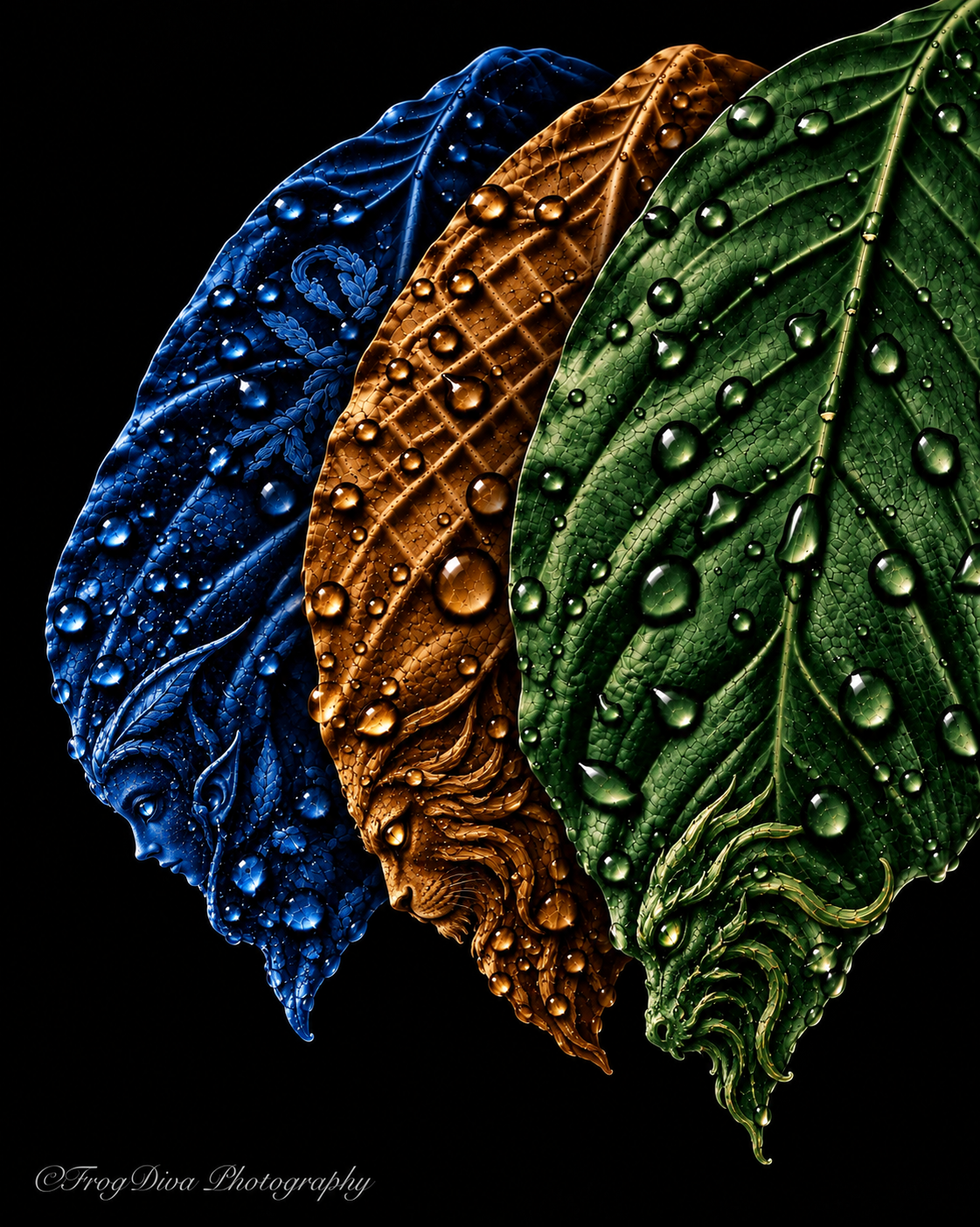
The next two images below are examples of AI-assisted digital art. Why? 1. I shot the source image, 2. I provided the creative brief, 3. AI transformed the images as indicated, and 4. the resulting images underwent human post-processing in Lightroom.
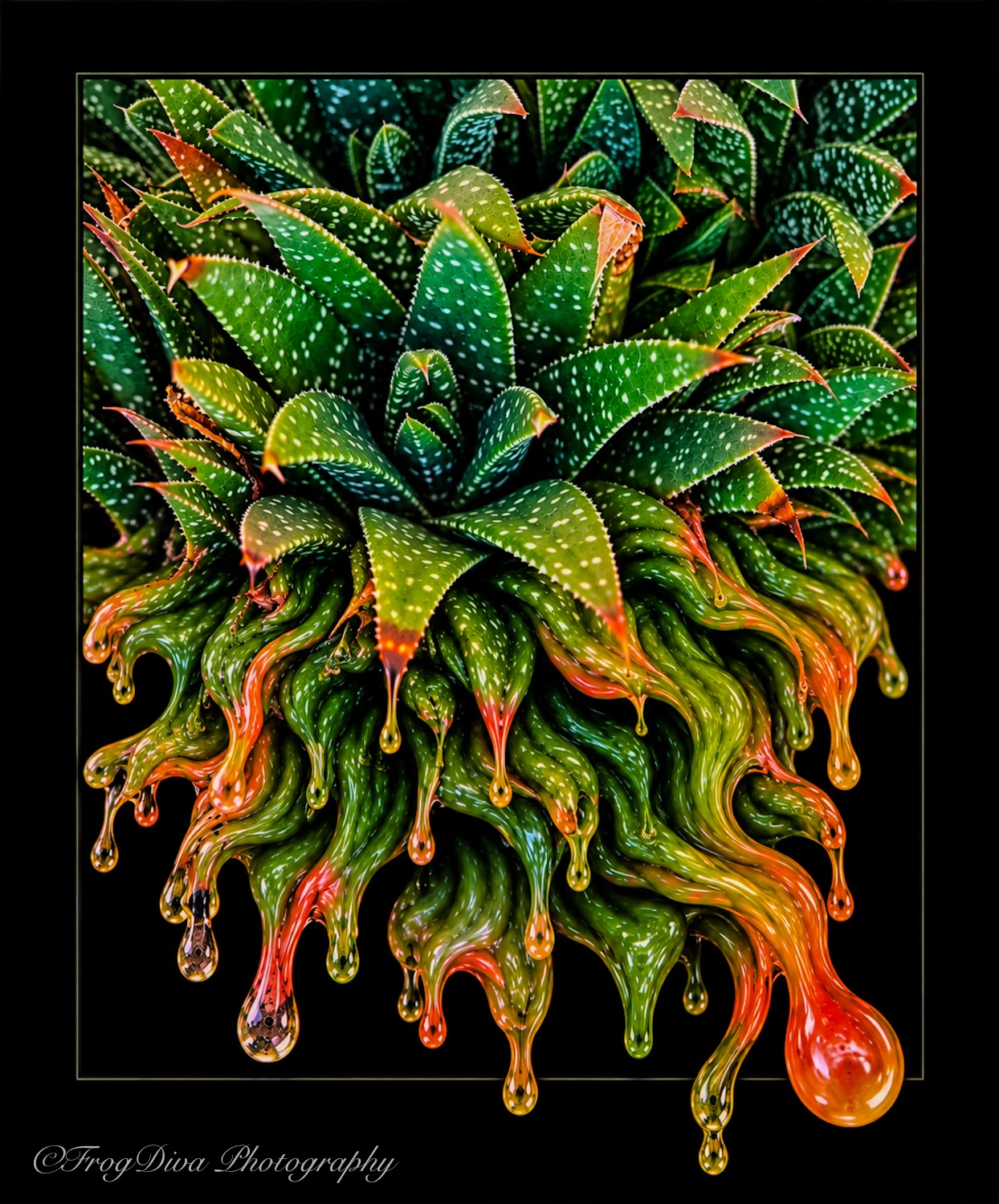
This next image is an example of AI-assisted photography because I used AI features in its editing process without substantially generating new visual content.

Social media, authenticity and trust
The ability to generate convincing images and videos creates a particular challenge for social media users. We have become accustomed to seeing photographs as evidence of something that happened, even though photography has never been entirely free from manipulation.
An image can be genuine but misleading because it lacks context. An edited image can depict a real event while altering important details. An AI-generated image can be entirely fictional yet perfectly legitimate as an illustration for a fantasy story. The problem arises when an audience is led to believe that fabricated content is authentic evidence.
A fictional illustration of a dragon flying over Lisbon needs little explanation in a fantasy blog. A photorealistic image presented as proof that a real person attended a particular event raises a different issue. A fabricated video that appears to show someone making a statement they never made raises more serious concerns.
Context, intent and the likely interpretation by the audience all matter. A label does not automatically make content deceptive, and the absence of a label does not prove that content is authentic. Technical detection systems can be useful, but they are not infallible substitutes for critical thinking.
We do not need to become forensic investigators every time we open Instagram. We do need to remember that a convincing image is not necessarily proof of a real event and to consider where content originated, whether there is corroborating evidence and whether it is being presented as fact, fiction, satire or artistic expression.
Four questions to ask
The next time you create, edit, publish or encounter something involving AI, try asking four simple questions.
What did AI actually do? Did it correct, suggest, summarise, transform or generate? Was it a minor part of the process or the principal source of the finished content?
Could someone mistake the result for an authentic photograph, recording or factual account? If content could reasonably mislead an audience about a real person, event or public-interest issue, transparency becomes particularly important.
Are there specific disclosure requirements? Check the relevant law, platform rules, employer policies and client instructions. Do not assume that a social media label and a legal disclosure obligation are interchangeable.
Would an explanation help the audience understand what they are seeing? Even when formal disclosure is not required, a brief explanation can provide useful context. Saying that a photograph has been substantially altered, or that an illustration was generated with AI, need not diminish the value of the work.
These questions are not a substitute for legal advice, but they offer a practical starting point for making informed decisions.
We need better questions, not just more labels
Artificial intelligence is not a single tool or activity. It is a broad collection of technologies being incorporated into applications and workflows we already know, alongside entirely new ways of creating content. Some uses are mundane and assistive; others are creative and transformative. Still others raise serious questions about authenticity, privacy, manipulation and accountability.
We should not have to treat every minor use of an AI feature as though we had outsourced our entire creative process. Equally, we should not hide substantial AI generation behind the claim that we merely used editing software. There is room for nuance between those extremes.
The people who moved from handwritten ledgers to spreadsheets did not stop being accountants. Photographers who moved from film to digital did not stop being photographers. Writers who use editing software do not automatically surrender authorship of their work. But each technological transition requires us to understand what has changed, and AI is no exception.
We need to learn the vocabulary, understand the capabilities and limitations, and recognise where human judgement remains essential. We also need clearer, more proportionate approaches to disclosure, so people can distinguish ordinary technical assistance from content that materially changes what an audience believes to be real.
The goal is not to label everything, nor to dismiss everything labelled AI. It is to understand enough to make informed choices, use the tools responsibly and evaluate what we see with a healthy degree of curiosity. Because the most useful question is not simply, “Is it AI?” It is this: What did the AI do, what did the human contribute, and what should the rest of us understand about the result?
Related blogs:

