
On family heirlooms, expensive gadgets, and the things that money cannot measure.
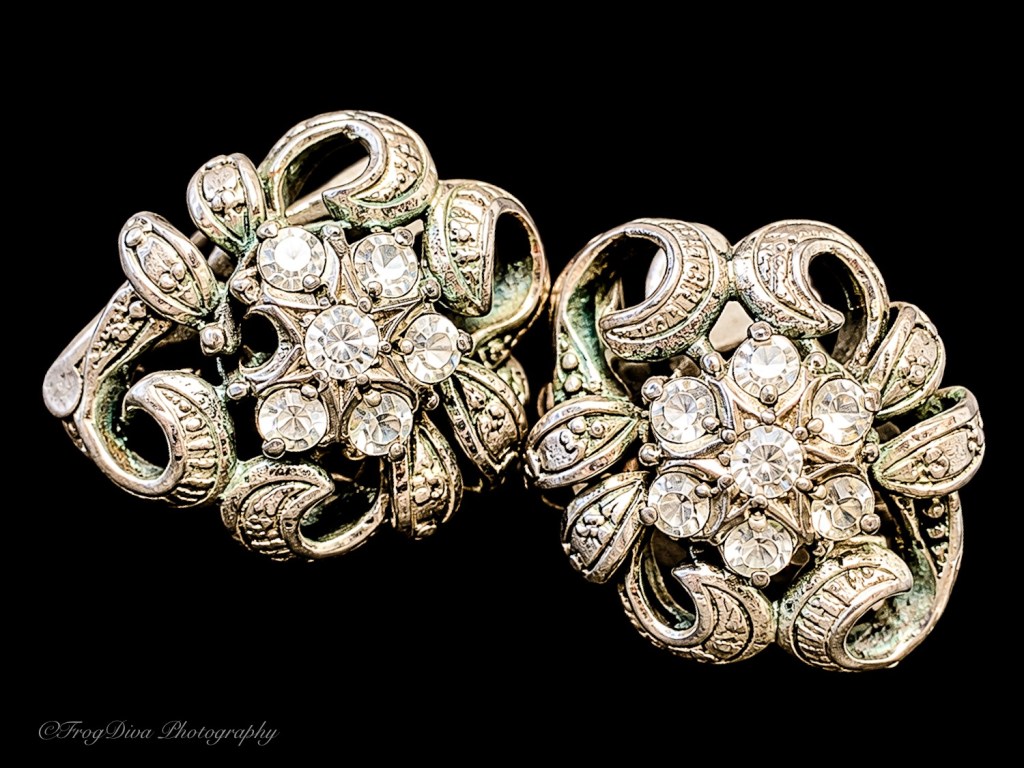
I inherited a pair of earrings from my mother, who had received them from my grandmother. Over the years, they have become one of my most treasured possessions. I have worn them faithfully through different stages of my life, different homes, and all the adventures and upheavals in between.
One day, I took them to a jewellery store for cleaning and appraisal, curious to learn a little more about them and perhaps discover something about their history. The verdict was unexpected: the stones were zirconia, not diamonds, and what I had assumed was white gold turned out to be stainless steel. Did I care? Not in the slightest. Those earrings had been worn by two of the strongest women in my life: my grandmother, who kept our family together during the war, and my mother, who raised a child through surgeries, relocations, and all the challenges life threw her way.
To me, these earrings are worth more than diamonds. They connect me to the women who came before me and remind me of where I come from. They represent endurance, resilience, and the strength that can be passed from one generation to the next without a single word being spoken. Whenever I wear them, I am reminded that life does not always unfold according to plan, that we sometimes have to start over, and that giving up is not the only option available to us. The earrings may not be made of precious materials, yet they continue to shine. Apparently, they do not need a certificate of authenticity to do that.
The Price Tag and the Story Behind It
We live in a world that has become remarkably efficient at putting a price on almost everything. We can compare prices across dozens of online shops in seconds, check reviews, calculate discounts, hunt for limited editions, and have our purchases delivered without ever speaking to another human being. The convenience is undeniable, yet somewhere along the way, we have become rather good at confusing the price of something with its worth.
A diamond may have considerable market value, but it cannot automatically replace the sentimental value of a modest piece of jewellery passed down through a family. A designer handbag may cost more than a month’s groceries, while an old canvas bag that has accompanied us on countless journeys may hold more memories than we could ever count. Neither object is inherently better than the other; the difference lies in what we see when we look at it. Do we see a product, or do we see a story? Do we see something that can be replaced with a quick online purchase, or something that has become irreplaceable because of the experiences attached to it?
There is no universal price list for these things. Some of the most important values in life cannot be entered into a spreadsheet, and no appraiser can determine what an object means to the person who owns it.
Does Everything Need to Be Smart?
Every year brings a new phone, a new watch, or another device promising to make our lives easier, faster, and more connected. Marketing tells us what we are missing, what we could be doing better, and why the latest model might finally transform our daily existence. Technology can certainly be useful, so there is no need to retreat to a cave and communicate by carrier pigeon. Still, I occasionally wonder whether we have confused technological sophistication with practical usefulness.
Take a watch. I want to know the time, arrive on time, and be able to rely on my watch. For that purpose, a €20 analogue watch with two hands will do the job perfectly well. It does not need to sync with my phone, maintain a Bluetooth connection, negotiate with an app, or remind me that its battery is running low just when I am trying to leave the house. It tells me the time, I read the time, and we understand each other.
An Apple Watch or another smartwatch can, of course, do considerably more. Its health features, notifications, accessibility tools, and fitness tracking may be genuinely valuable to someone who uses them. There is nothing wrong with paying for features that improve our lives. The question is whether we actually need what we are buying or whether we have simply become accustomed to wanting whatever comes next.
Does the latest iPhone really matter if the phone we already own makes calls, sends messages, takes perfectly good photographs, and keeps us connected to the people who matter? Sometimes an upgrade is worthwhile or necessary. On other occasions, the only thing wrong with our existing device is that someone has released a newer one. There is a difference between buying something because it improves our lives and buying it because we have been persuaded that our lives are somehow incomplete without it. One is a conscious choice; the other can become a habit.
Connected, but Are We Closer?
Technology has transformed the way we maintain relationships. We can speak to family members thousands of kilometres away, exchange photographs in seconds, and celebrate birthdays without sharing the same room. For those whose lives have taken them far from their families, these possibilities are precious. Technology can bridge distances that once seemed impossible to overcome.
However, being connected is not necessarily the same as being close. An entire friendship can unfold through a screen, and it is easy to mistake a steady stream of notifications for genuine companionship. We collect contacts, count followers, exchange reactions, and sometimes forget to ask ourselves what those connections actually mean.
A message can be sent in an instant, but understanding takes longer. A photograph can show us where someone has been without telling us how they felt when they arrived. A hundred birthday greetings on social media may be lovely, yet one thoughtful message from someone who remembers what we were going through last year can mean infinitely more. The value of a relationship does not depend on how frequently someone’s name appears on our screen. It depends on trust, attention, understanding, and the willingness to show up when it matters.
Sometimes that means a long video call; sometimes it means a handwritten letter. At other times, it means sitting beside someone in silence, without feeling the need to fill every moment with words. What matters is not the medium but what passes between two people. Give me time, not another gadget. Show me that I matter in your life, not what you can buy me. A thoughtful gesture, an honest conversation, or the simple act of remembering what matters to someone can be worth more than the most expensive gift.
The Things We Inherit That Cannot Be Appraised
When we speak of inheritance, we tend to think of money, property, jewellery, antiques, and other objects that can be assigned a monetary value. Some of our most significant inheritances, however, are far less tangible. We inherit stories, habits, sayings, recipes, and ways of looking at the world. We inherit the determination of someone who refused to surrender when circumstances became difficult, along with the quiet example of a person who carried on when nobody was applauding.
These things rarely come with certificates or formal documentation. We may not even recognise them as inheritance until years later, when we find ourselves doing something exactly as our parents or grandparents did. Perhaps we discover that we have the same stubborn determination as a grandmother who survived a war. Perhaps we realise that our ability to begin again comes from a mother who rebuilt her life more than once. Sometimes, we find ourselves wearing a pair of earrings that remind us, without saying a word, that we come from women who knew how to endure.
How would we calculate the value of an object that carries the memory of someone we loved? How would we put a monetary figure on the courage it represents or the comfort it provides on a difficult day? We cannot, nor should we have to. The earrings may be made of ordinary materials, but their story is extraordinary to me. Their value has grown through the years, not because their materials have become more precious, but because the meaning they carry has deepened. That is the peculiar magic of sentimental value: it can become richer with age.
Perhaps We Need to Redefine Wealth
None of this means that money is unimportant. We need it to pay our bills, feed ourselves, maintain a home, and enjoy the opportunities life offers. Quality matters, too. A well-made item that lasts for decades may be a wiser purchase than a cheap replacement bought every few months. There is nothing virtuous about struggling unnecessarily just to prove that we can live without modern conveniences.
Perhaps we could simply become more deliberate about the things we choose to value. Before making a purchase, we could ask ourselves whether it will genuinely improve our lives or whether we simply want the feeling of owning something new. Are we paying for quality, usefulness, and longevity, or mostly for a name and the status associated with it? Will we still appreciate this object in five years, when the excitement of opening the box has long since faded? Most importantly, what do we already own that serves us perfectly well?
We might discover that the old watch still keeps excellent time, that the well-loved coat has another winter in it, or that the kitchen table has hosted more meaningful conversations than any expensive restaurant ever could. We might also discover that a modest gift, chosen with care, can outlast a lavish one purchased out of obligation. Some of our greatest treasures may already be in our possession, not because they are expensive, but because they have accompanied us through difficult days and happy ones, remind us of people who shaped our lives, or fulfil their purpose without demanding constant replacement.
Keep Shining
I still wear my earrings. I know what the jewellery store told me about their composition. I know that the stones are zirconia and the metal is stainless steel. None of that has changed how I feel when I put them on. They belonged to my grandmother, then to my mother, and now they belong to me. When I wear them, I carry a little piece of both women with me. I am reminded of a family held together through difficult times, of a mother who persevered through surgeries and relocations, and of the quiet strength that can travel through generations in the most unexpected ways.
The earrings do not need to be diamonds to shine, and I do not need them to be worth a fortune for them to be priceless to me. Perhaps that is the lesson worth passing on: not everything that glitters is gold, not everything expensive is valuable, and not everything valuable can be bought.
The newest phone will eventually become obsolete, the smartwatch will acquire another generation of successors, and today’s must-have accessory will make way for tomorrow’s. The stories we carry, the people who shape us, the kindness we receive, and the strength we learn from those who came before us can remain with us for a lifetime. Buy the watch if you want it, enjoy the diamonds if they make you happy, and embrace the technology that genuinely makes your life better. Just remember to look beyond the price tag.
What something costs is not the same as what it is worth. Sometimes, the things that matter most are the ones that would fetch the least at an auction yet mean the world to the person who owns them. May we all learn to recognise the difference and keep shining, whatever we are made of.
In case you missed them:
Culinary Vindication After 30 Years
From The Esoteric Frog: The Oak Tree Conversations
From the Marie Balustrade blog: Dancing Winds series in reading order

