
I love German bread. I respect European cold cuts in all their glorious variety, and I bow before cheese in practically every form: young, medium, aged, washed-rind, blue, mouldy enough to develop its own diplomatic relations. I also understand that food traditions matter. Germans, in particular, take their bread seriously, and what goes on a Brötchen (bread roll) is not necessarily a matter of personal whim. There are rules, conventions and, apparently, a committee somewhere prepared to enforce them.
Unfortunately, I was raised on American sandwiches and Mexican tortas, where the guiding principle is considerably more democratic: pile it all in, close the bread, and let the taste buds sort out the consequences. Sweet, savoury, crunchy, creamy — if it works for you, who exactly appointed the culinary police?
For the past thirty years, my personal contribution to this cultural divide has been what I call the I Don’t Know What I Want combination: a bread roll with raspberry jam and Emmentaler cheese. Yes, jam. Yes, cheese. Together. The reaction from certain quarters of the German population has ranged from profound disbelief to what I can only describe as social ostracism. Apparently, a perfectly respectable Brötchen can be brought into disrepute by the wrong choice of topping. I have endured the criticism with admirable dignity, although I reserve the right to be smug about it now.
After all, this is a country that gave the world Handkäse mit Musik (a traditional Hessian sour-milk cheese served with a sharp onion-and-vinegar marinade). The name translates literally as “hand cheese with music”, with the musical element being a rather cheeky reference to the digestive consequences of the onions. A culinary tradition that cheerfully acknowledges the possibility of an impromptu wind ensemble can hardly claim the moral high ground over raspberry jam and cheese. I rest my case.
Naturally, the international sandwich community offers plenty of evidence in my defence. Take the American peanut butter and jelly sandwich, or PB&J, a combination so beloved that questioning its legitimacy would be tantamount to challenging the Constitution. Peanut butter is rich and savoury; jelly brings sweetness and fruit. Somehow, this marriage has survived generations without requiring a parliamentary inquiry into whether the ingredients ought to have met in the first place. Add Elvis Presley’s famously extravagant peanut butter, banana and bacon sandwich to the discussion, and the argument becomes even more entertaining. The King himself was not above combining sweet, salty, fatty and fruity in one glorious construction. If it was good enough for Elvis, surely my raspberry jam and Emmentaler deserve a fair hearing.
Then there is Newcastle, where the humble bread roll can be filled with chips — or fries, if you insist on speaking American. The result is the legendary chip butty, a carb-on-carb creation that makes absolutely no apology for itself. Bread filled with fried potatoes, often dressed with butter and sauce, is not a culinary compromise; it is a declaration of independence. Somewhere in Germany, a food purist is fainting into a linen napkin, while Newcastle carries on eating lunch. And frankly, I respect that.
Nor can we ignore the generations who grew up on bread spread thickly with butter and finished with a sprinkling of sugar. This was a perfectly ordinary childhood treat in the 1970s and remains a fond memory for many. Sweet bread is hardly a revolutionary concept, yet apparently adding cheese to fruit preserves crosses a line that butter and sugar somehow tiptoe around. The logic is fascinating, if not entirely convincing.
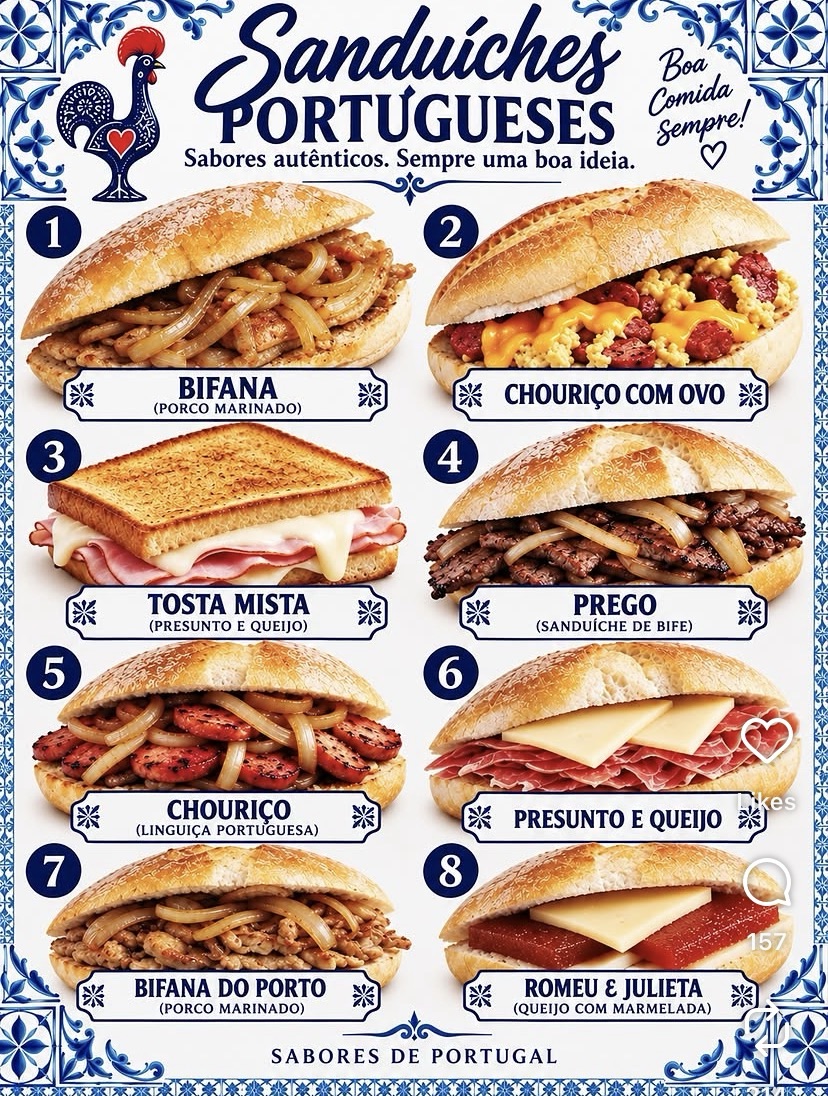
My vindication finally arrived in Portugal, land of excellent bread, formidable sandwiches and a refreshingly practical attitude towards putting things between two slices. The Portuguese sandwich guide in my possession features Romeu e Julieta (Romeo and Juliet), a combination of cheese and quince paste. There it was, printed proudly on a menu: fruit preserve and cheese, together at last, without a German jury in sight. In Brazil, the same name is traditionally associated with cheese and guava paste, but the principle is identical. Sweet meets savoury, cheese meets fruit, and civilisation somehow survives.
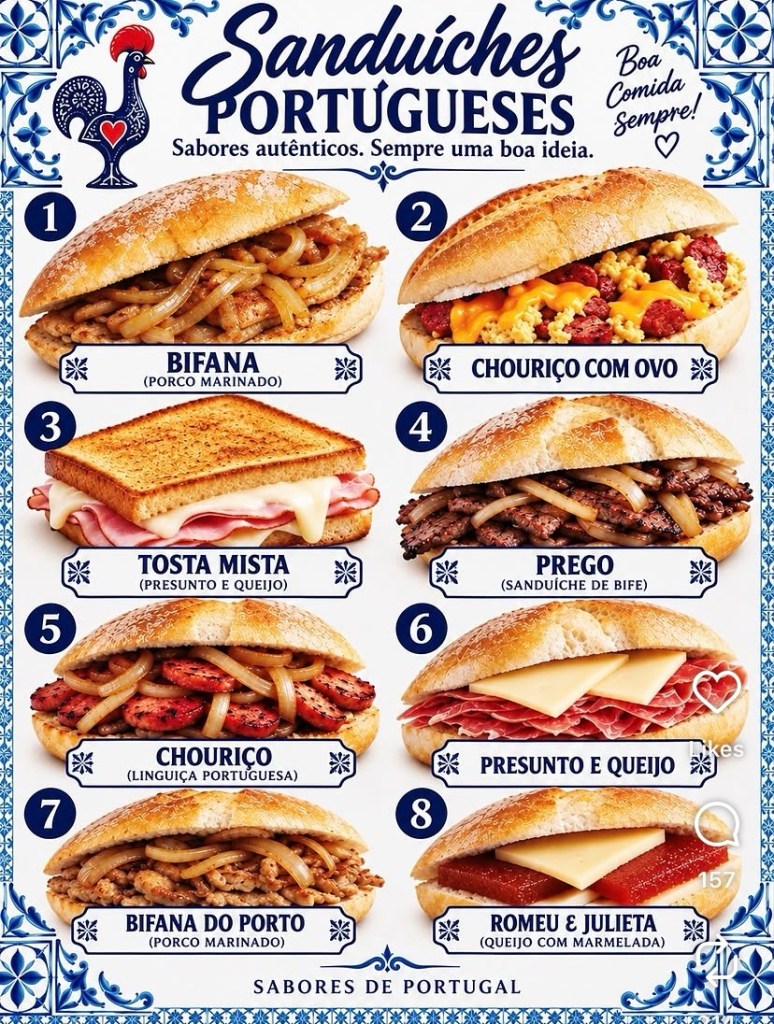
I stared at that Portuguese sandwich list with the quiet satisfaction of someone who has waited three decades for an official ruling. My I Don’t Know What I Want combination had finally found diplomatic recognition. Perhaps I was not a culinary heretic after all. Perhaps I was simply ahead of my time, or at least living in the wrong jurisdiction.
Of course, the moment one starts questioning food conventions, the floodgates open. I have been known to dip Indian paratha into Greek tzatziki, then reach for pumpkin-and-carrot preserve instead of the expected pickle. Somewhere, an Indian mataji (respected mother or elder woman) is shaking her head, while a Greek grandmother is wondering why her cucumber-yoghurt sauce has been recruited into this particular alliance. I can only apologise for the confusion, not the combination.
Food is memory, comfort, geography and family history, but it is also experimentation. Every tradition was once somebody’s idea, and every beloved classic began with someone putting ingredients together and deciding they belonged. We can honour the rules without treating them as international law. After all, if a chip butty can thrive in Newcastle and cheese with fruit paste can earn a place in Portugal’s sandwich repertoire, my raspberry jam and Emmentaler have every right to exist.
Thirty years of criticism have brought me to a simple conclusion: I shall continue to make my sandwiches exactly as I please. I will buy the good German bread, slice the excellent cheese, open the raspberry jam and combine them with the confidence of a woman who has finally found international support for her cause.
And should anyone object, I shall smile, take another bite and point them towards Portugal.
The case is closed. Lunch is served.

