
One of my earliest memories of gardening belongs to my grandmother. She had what people call a green thumb, although I suspect it had very little to do with her hands and everything to do with her heart.
She did not have a sprawling garden. There were no raised beds, irrigation systems, imported composts, or colour-coded planting plans. In front of her house was a small patch of concrete crowded with an assortment of tins, buckets, and whatever else could be repurposed into a plant pot. Yet somehow, everything grew.
Her orchids were the exception. Those were treated like royalty. She tied them to pieces of driftwood, wrapped their roots in coconut husk, and hung them where they could catch the morning light. Every day she greeted them as if they were old friends. She talked to them while watering, occasionally scolded them when they looked particularly stubborn, and never forgot to thank them when they flowered.
She could make almost any cutting grow. Family legend held that if she admired a plant while walking home from church, there was a fair chance a cutting might somehow accompany her home. Whether acquired with permission or through what might politely be called horticultural diplomacy remains lost to history. What is certain is that a twig in her hand usually became a thriving plant a few months later.
My grandmother was a frugal woman. Spending money on fertiliser would have seemed almost extravagant. Her secret was a watering can and diluted urine. Her plant supports consisted of whatever happened to be available that week: string, ribbon, or a length of discarded wire. If a plant needed help standing upright, she found a way. Nothing matched, yet everything worked.
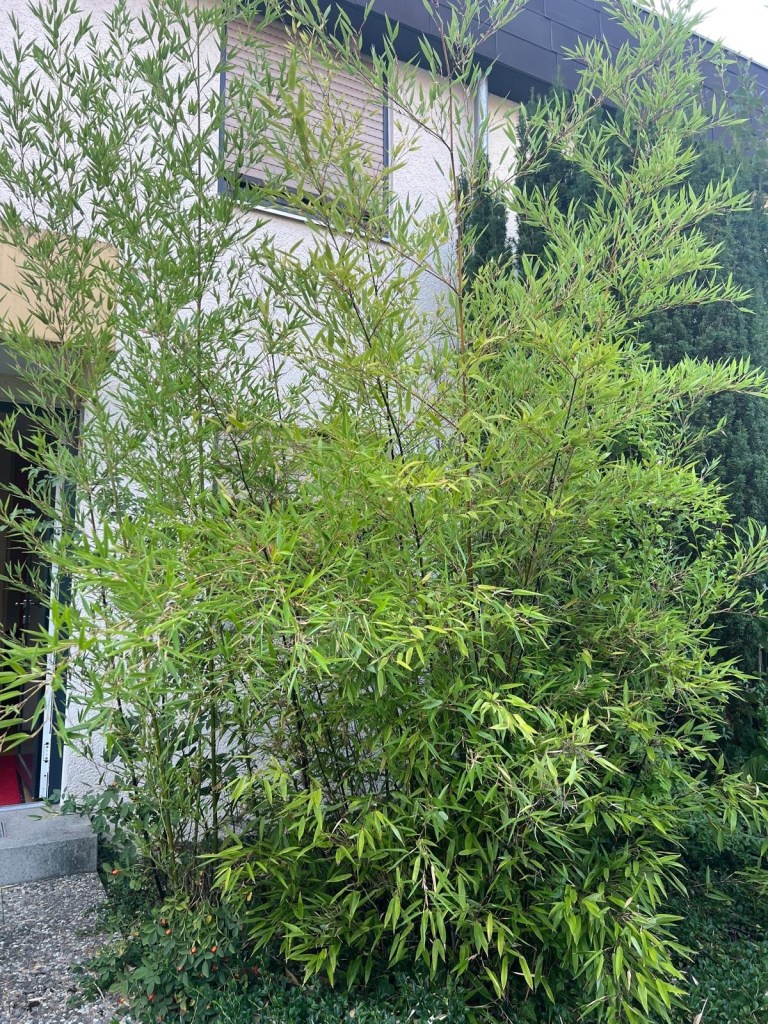
Years later, I passed some of that wisdom on to a friend in Germany who complained that his bamboo was stunted. He asked if I knew any Asian secrets for encouraging bamboo growth. Keeping a perfectly straight face, I instructed him to pee on the bamboo regularly and then water it thoroughly. He followed the advice, and I promptly forgot all about the bamboo.
Several years later, I remembered it and asked what had become of the plant. The answer arrived in the form of a photograph. By then, the bamboo had ceased being a plant and had become a landmark. Whether its success should be attributed to horticultural science, grandmotherly wisdom, or blind faith remains open to debate. What is not open to debate is that the bamboo now appears to be plotting a takeover of the entire neighbourhood.
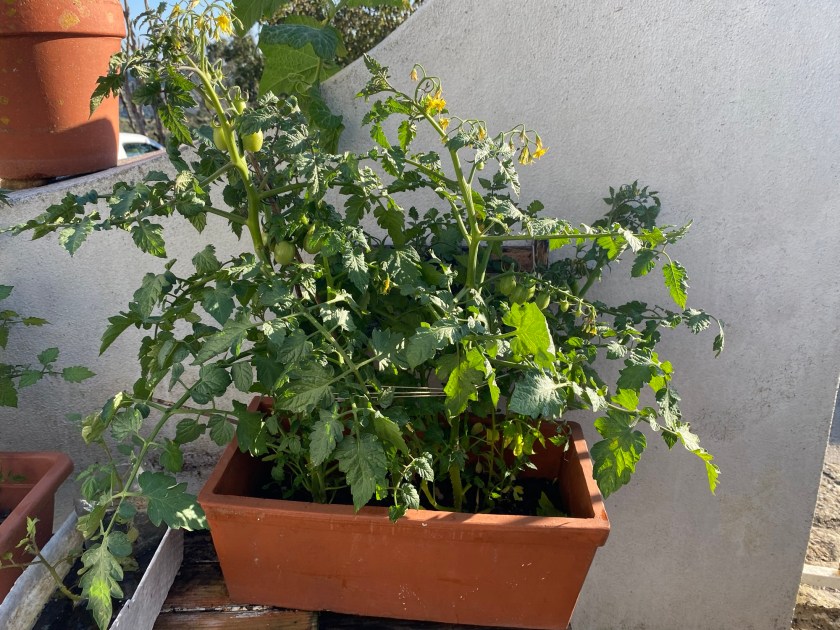
I thought about both my grandmother and the bamboo recently while standing in FrobbitShire, staring at a collection of tomato plants that had clearly missed the memo about personal space.
The plan had been simple enough. Order some garden stakes. Wait for delivery. Support the tomatoes properly.
Unfortunately, somewhere between the warehouse and the little blue-and-white house, an enthusiastic courier developed a different interpretation of the word delivery. The stakes never arrived, while the tomatoes continued growing with the confidence of teenagers who had just discovered energy drinks.
For a brief moment I considered ordering another set. Then the spool of string and the scissors had a quiet conversation with two wooden garden chairs that had recently been reassigned from seating duties, and a new plan was born.
The chairs became support structures, string was woven between them, and the tomato branches were gently guided into place. No engineering awards will be issued, and no gardening magazine is likely to feature the arrangement on its cover. Yet there it stands: functional, sustainable, and entirely assembled from things already on hand.
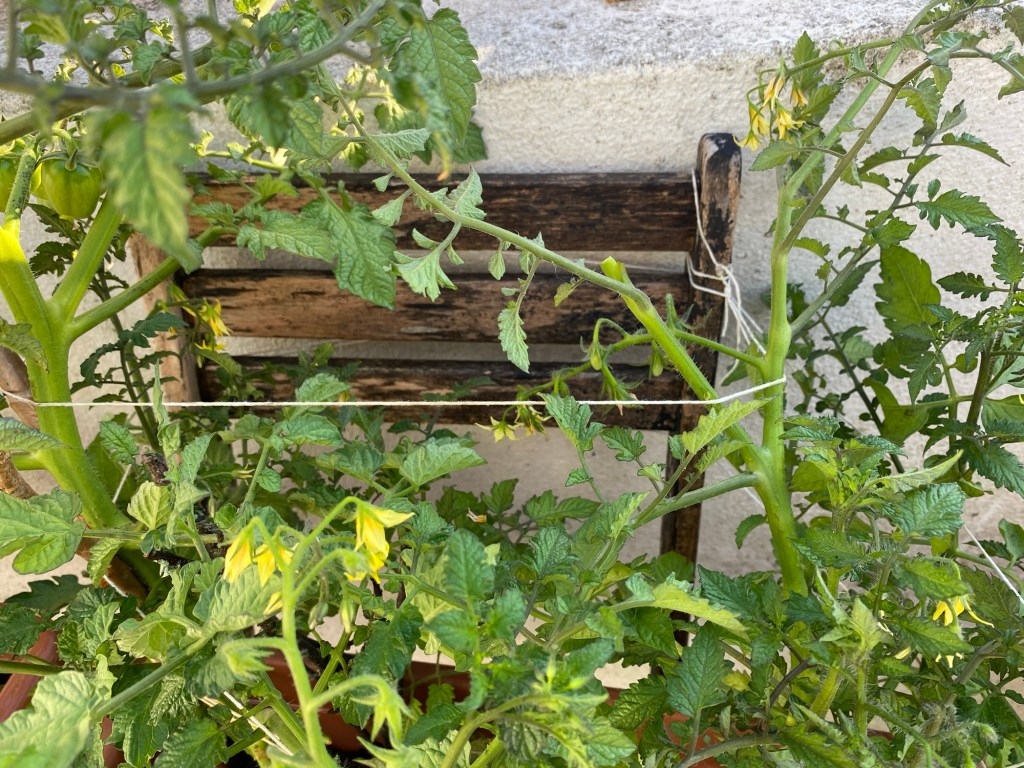
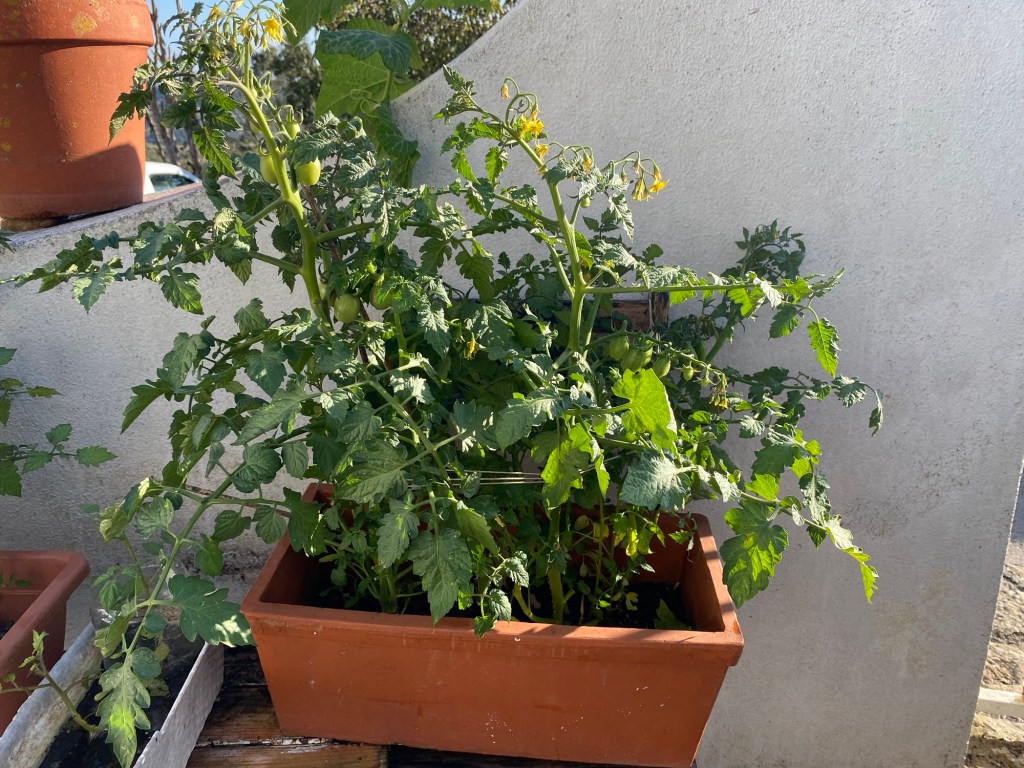
The FrogDiva inspected the results and declared the project a success. Not elegant or perfect, perhaps, but sustainable, functional, and entirely appropriate. That word seems to be disappearing from modern gardening.
Scroll through social media and it is easy to believe that successful gardening requires specialised trellises, designer raised beds, automated irrigation systems, humidity-controlled greenhouses, grow lights, moisture sensors, premium fertilisers, and enough accessories to outfit a small agricultural research station. There is nothing inherently wrong with any of those things. The problem begins when we mistake them for the reason plants thrive.
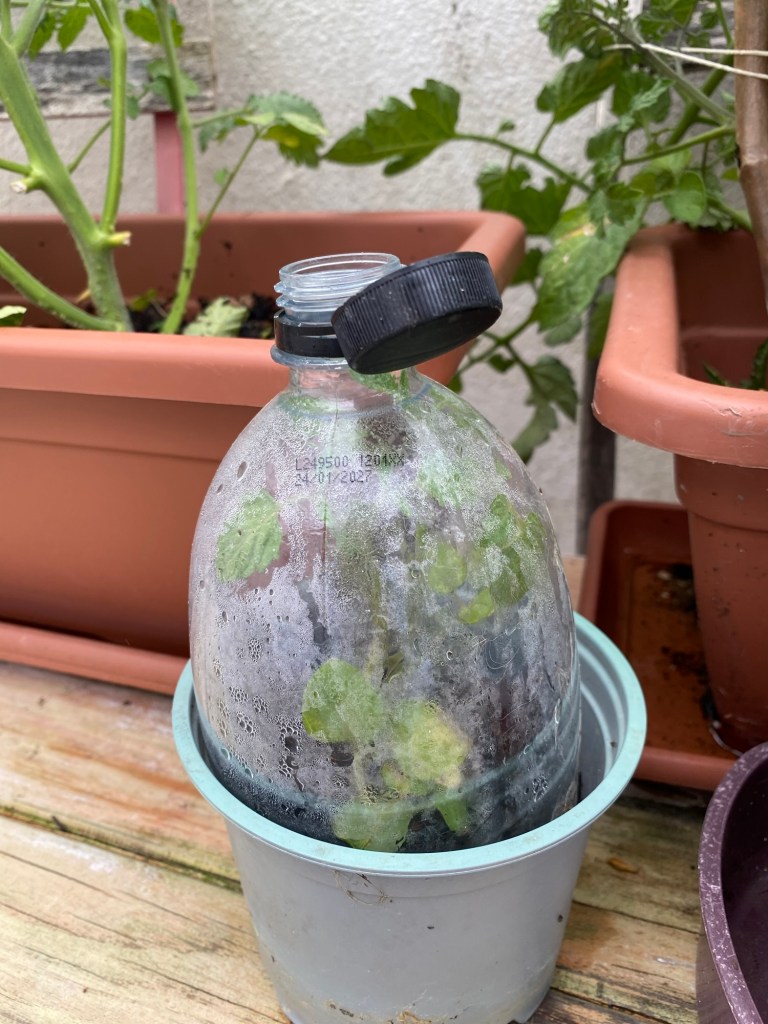
People spend small fortunes building greenhouses that end up being used twice a year. Others buy sophisticated plant supports and ergonomic gardening tools, only to wonder why their tomatoes still collapse, their basil bolts, or their seedlings mysteriously vanish. Meanwhile, a surprising amount of life flourishes beneath cut-down plastic bottles, beside recycled containers, supported by bits of string and whatever retired household object happens to be available for reassignment.
The missing ingredient is rarely another purchase. More often, it is attention. Gardening has always rewarded mindfulness more than money. Plants are constantly communicating. Leaves droop, colours change, growth slows, new shoots appear, flowers open, and roots search. The signs are there every day for anyone willing to pause and notice them. The gardener who spends five minutes observing their plants often achieves more than the gardener who spends fifty euros on the latest gadget.
Patience matters too. A tomato does not care about deadlines. A cutting cannot be rushed. Seeds have no interest in productivity targets. Nature operates on its own timetable, and one of the quiet gifts of gardening is learning to respect it.
The proof sits all around me: tomatoes supported by recycled chairs and string, seedlings growing beneath improvised bottle cloches made from discarded water bottles, propagation stations assembled from old jars, and containers that began life with entirely different purposes. None of it is particularly sophisticated, yet all of it works.
Perhaps that is the lesson my grandmother understood long before gardening became an industry. Plants do not need perfection or expensive solutions. They need care, consistency, and gardeners who are willing to pay attention.
The most important tool in any garden has never been a fertiliser, greenhouse, trellis, or moisture meter. It is mindfulness. Everything else is just string.

