
A Craving, a Fridge Dough and Three Evictions
Sometimes a craving strikes, but the recipe is nowhere to be found and the inclination to look it up is entirely absent. Today, I wanted Filipino pan de coco, that lovely coconut-filled bread with its sweet, fragrant filling. Brazil has its own cousin in pão de coco, so apparently the marriage of bread and coconut enjoys international appeal.
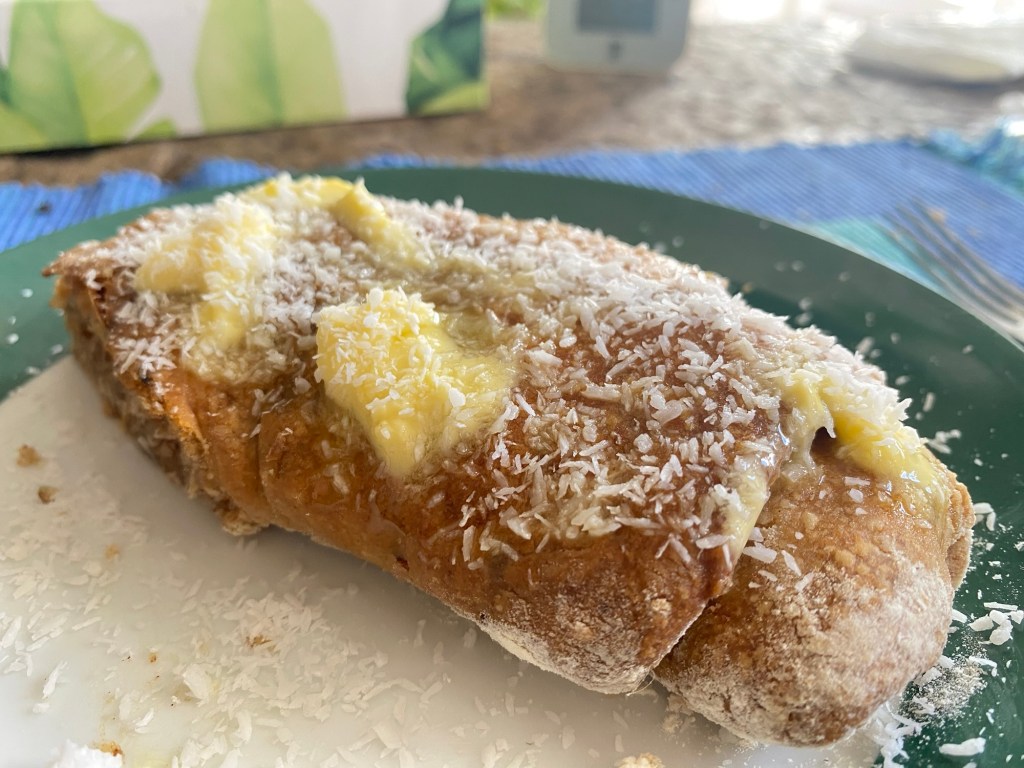
Fortunately, I had artisan dough in the fridge. Out it came, rolled nice and thin, spread generously with butter, then layered with a mixture of cinnamon sugar and grated coconut. I rolled the whole thing up, popped it in the oven, and twenty-five minutes later, voilà! Pan de Cocanela was born. A little pan de coco, a little cinnamon roll, a little improvisation, and absolutely no consultation with the authorities.
Naturally, the kitchen inspectors arrived. Three orange felines, all convinced that the kitchen fell within their personal jurisdiction, descended upon the proceedings. One inspected the dough at dangerously close range, another attempted to supervise from inside the very space I needed to occupy, and the third assumed the role of Chief Inspector of All Things Butter with the solemnity of a Supreme Court justice.
I evicted them. They returned. I evicted them again. By the third round, I was no longer baking but managing a security crisis involving furry repeat offenders who regarded kitchen boundaries as a personal affront to their constitutional rights. Their remorse was nonexistent; their determination, formidable.
Eventually, the inspectors were removed and the warm creation emerged from the oven. I immediately lathered it with butter, allowing it to melt into the cinnamon-coconut swirls, then sat down to enjoy the fruits of my labour. That was when the Quality Control Department declared war.
A plaintive mrrrrow sounded from somewhere in the house, followed by another and then a third. Within seconds, the complaints escalated into a full-scale operatic production featuring soprano, contralto, and what sounded suspiciously like a tenor who had swallowed a foghorn. The sustained notes of unbearable suffering and dramatic crescendos suggested that three innocent creatures had been abandoned in the wilderness without food, shelter, or legal representation.
The injustice, according to them, was immeasurable. Management had baked something fragrant, applied butter, and sat down to enjoy the finished product without distributing samples to the inspection team. This was not mere negligence; it was a scandal. I could practically hear the opening-night reviews: Three Orange Tenors Deliver Devastating Performance in The Case of the Missing Coconut Bread. Human Refuses to Cooperate.
One inspector positioned himself directly in my line of sight, another increased the volume, and the third appeared to conduct the entire orchestra, pausing between arias only to check whether my resolve had weakened. It had not. The Pan de Cocanela was warm, the butter was melting, and the coconut and cinnamon were working their magic while I savoured every bite. The feline opera company, meanwhile, continued its tragic performance of The Great Butter-and-Coconut Betrayal.
Deutscher Baukunst: The Engineering Report
Naturally, a finished product of this calibre required a technical assessment. The verdict was Deutscher Baukunst: German engineering at its finest. The filling had stayed exactly where it belonged, with no cinnamon-coconut casualties, no butter leakage, and no unexpected structural modifications. The rustic exterior remained intact, while the cross-section revealed beautifully contained layers of cinnamon and coconut.
Structural integrity: excellent. Filling retention: 100%. Baker’s intuition: vindicated. Recipe consultation: absolutely none.
Somewhere, a German civil engineer was nodding approvingly. The three orange inspectors, however, lodged an objection on the grounds that the building materials had not been made available for independent testing. Their appeal was dismissed for lack of evidence. The evidence, as it happened, was already being eaten.
The Final Verdict
Culinary genius sometimes requires a recipe; on other occasions, twenty-five minutes, a roll of fridge dough, butter, cinnamon sugar, grated coconut, and the confidence to wing it will do nicely. The process may also require the diplomatic skills of a hostage negotiator, the eviction powers of a landlord, the nerves of an avant-garde opera audience, and the structural standards of a German engineering firm.
Pan de Cocanela: born of a craving, raised on improvisation, finished with butter. German engineering, Filipino soul, Brazilian relatives.
The cats have lodged a formal complaint, demanded an independent investigation, and called for the immediate resignation of management. I have eaten the evidence, and the appeals process remains ongoing.

