
“It is our attitude toward events, not events themselves, which we can control. Nothing is by its own nature calamitous – even death is terrible only if we fear it.” – Epictetus
“Peace be with you.”
“And also with you.”
Few exchanges carry as much quiet weight. It unfolds almost routinely, woven into the rhythm of the Catholic Mass, spoken without urgency, often without pause. And yet, beneath its familiarity lies a truth we may have forgotten: before anything else, we are meant to wish one another peace. Not success. Not productivity. Not even happiness. Peace.

Across traditions, this instinct repeats itself, as if humanity has always known something essential about what we owe one another:
In Hebrew, Shalom. In Arabic, As-salamu alaykum. In Sanskrit and many Indian languages, Namaste, often accompanied by folded hands, a gesture that recognizes the sacred in the other.
In Thailand, the wai, a bow with hands pressed together, offered with quiet respect. In Japan, a bow that lowers the body in acknowledgment of another’s presence and dignity.
Different words. Different gestures. The same intention. Before conversation, before transaction, before identity or opinion, there is an offering: I see you. I honor you. I wish you peace.
Somewhere along the way, we have replaced this with something faster, lighter, easier. Hi. How are you? Love your latest post. We skim past each other’s lives in fragments and updates, mistaking awareness for connection. We assume we know how someone is because we have glimpsed a curated moment. We greet without truly encountering. We speak without truly offering. And in doing so, something essential has thinned. Because to wish someone peace is neither casual nor neutral. It is an intentional act that acknowledges the weight each person carries. It recognizes that behind every face is a private landscape of struggles, fears, hopes, and losses we may never fully see.
To say “peace be with you” and mean it is to pause, even briefly, and stand in solidarity with that unseen reality. It is to choose, in that moment, not to add to the noise of the world, but to soften it.
The ancient gestures understood this in a way we are only beginning to remember. Folded hands are not just polite. They signal openness, a setting aside of aggression, an offering without demand. A bow is not submission. It is recognition, a lowering of oneself to meet the other in shared humanity.
Even the handshake, so common that it now feels almost automatic, carries a similar origin. It is believed to have emerged as a gesture of trust, when individuals would extend an open hand to show they carried no weapon. In some accounts, medieval knights would grasp each other’s forearms to ensure that no blade was hidden within the sleeve. What we now perform as routine courtesy was once a quiet declaration: I come without harm. I meet you in peace.
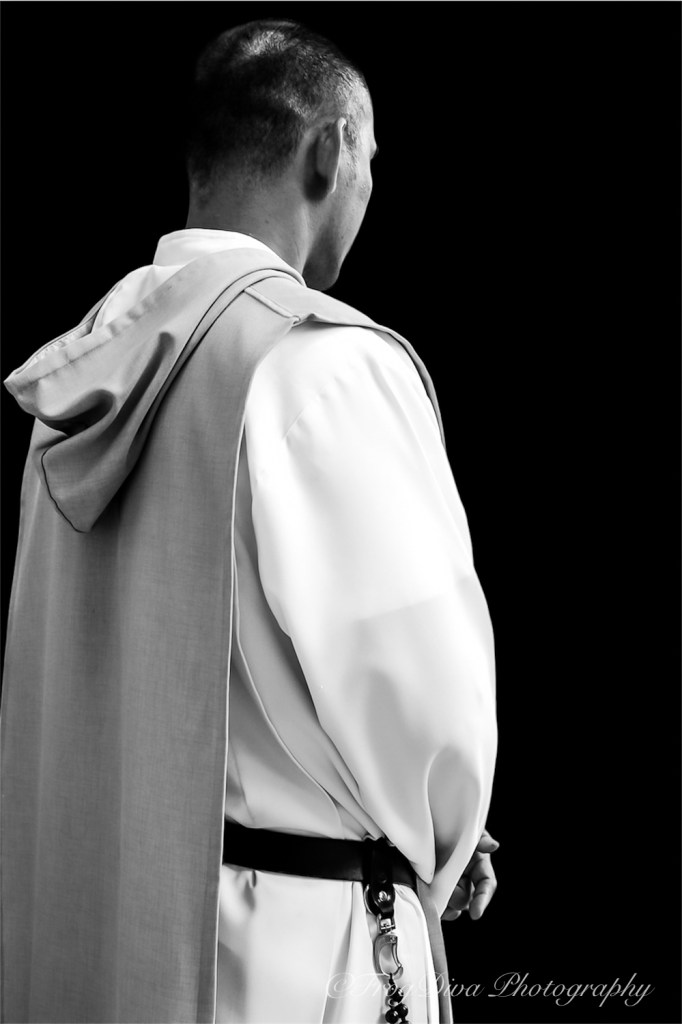
These gestures carry something our words alone often no longer do: presence. And perhaps this is where Epictetus meets us. We cannot control the events unfolding around us. Not the conflicts, not the instability, not the losses that seem to ripple across the world with increasing force.
But we can choose our posture within them.
Choose whether we move through the world hurried and closed, or attentive and open.
Choose whether our presence contributes to tension, or to quiet.
Peace, in this sense, is not the absence of conflict. It is a way of being within it. This is what makes the simple exchange at the heart of the Mass so powerful.
“Peace be with you.”
“And also with you.”
It is mutual. It is reciprocal. It is not something one gives from abundance alone, but something we offer even in our own incompleteness. In a world where so many are unsettled, displaced, or uncertain, perhaps this is where we begin again. Not with grand declarations, but with conscious greetings. Not with louder voices, but with steadier ones.
To look at another person and, whether aloud or silently, offer something deeper than habit:
May you have peace.
May you be met with kindness.
May you feel, even briefly, that you belong.
Greet with awareness. Meet one another with open hands, not guarded ones. Remember that every encounter, no matter how small, carries the possibility of either distance or connection.
Choose, simply and deliberately, to offer one another peace.
A blessed Easter to you.
Related blogs : The Easter Triduum
Holy Thursday: To Savour or To Handle
Good Friday: The Rhythm of Belonging
 FrogDiva Thoughts